
HAYLA on “DARK,” Grief, and Finding Hope Through Music
BY SASHA BASANT
After years building a name as one of EDM’s most distinctive vocalists, HAYLA has entered a new era with “DARK.” What started as a few recording sessions and an attempt to renew her love for writing again quickly become something much more personal. Written over just eight weeks, the record captures one of the most painful periods of HAYLA’s life turning grief, heartbreak, and loss into something raw and deeply human.

DARK marks a turning point from the EDM sound HAYLA has become known for, She has no intentions of abandoning it. Instead the album has given her the space to experiment, with her voice, texture and imperfection. Without going back to polish away any small, the imperfected rawness became part of the record's honesty. That honesty is the heart of DARK. HAYLA may have described the record as “sad bitch” music but beneath the grief are moments of connection and hope.
While DARK represents a new side of HAYLA, the album has given her a new perspective on how those different sides of her craft can exist together. With her next era already taking shape in her mind, HAYLA is looking towards a sound that continues to leave space for emotion and vulnerability. After seeing how these songs have connected with people she has also found a new importance in sharing the things that can be the hardest to say, in allowing music to create connection she aims on reminding people that they are not alone.
In an interview with Televised Magazine HAYLA discussed the unexpected creation of her new album DARK, using music as a form of catharsis, finding hope within grief, taking the album on tour, her approach to fashion and what the next version of HAYLA might sound like.
Your album “DARK" has been out for almost a full month, congratulations on that first and foremost. You’ve mentioned before that this album was not planned, that it “just happened.” When did you first realise that it was becoming an album because you mentioned you were just going in for a few sessions?
HAYLA: Honestly I had two songs basically that were written about – a year, maybe a year and a half before the rest of the body of work. But the rest of the body of work was written, I think it’s about eight tracks – maybe more – nine tracks. They were written over eight weeks and I just remembered after the last one of those sessions I just said to my manager, I was like “I think I’m done”. and he said “what do you mean done?” and I said “I think there might be something here.”
I just went and listened to the tracks and I was like this is such a pinnacle point in my life that I feel like this as a coherent body altogether because it was an absolute pinpoint in my life. Everything I was going through exactly at that moment in time. It just felt like, even though it was different to what I’ve done before, even though it wasn’t the EDM album it just felt like “I think I’ve got to do something with this.” Honestly it was just after the last session and when I listened back to the song I remember saying to my manager “yeah I think I’m done” and he really was like “what you mean done?” I was like I think I’ve got a body of work you know and he was like “Okay!”
I think if I had any pressure applied – I think if somebody had said to me “you have to write an album within eight weeks” I would’ve been like “What?!” But the fact that there was no pressure whatsoever and it was literally just, I was just going in to see if this was working and also just to have some sort of release emotionally and create and just try and find the love for writing again. I think that really just helped it be the most authentic and honest thing that I’ve written.
You mention it has a very personal tie to you, and listening to the album, it's kinda heavy emotionally. Was there a part of you that thought “i dont know if im ready to release or something this personal” for the public?
HAYLA: Because I hadn't thought about making it, I know that sounds really funny. Literally the days of the sessions I did not know that I was gonna write these songs. There was no prewritten. There was no idea. There was no nothing. It was like, whenever I felt that day. Sometimes, maybe I’d have a conversation with somebody about something and it would just spark an idea or a piano chord that would make me just think. Most of the time when I ended up recording those sessions, I was surprised that I was able to share so much and I didn’t anticipate that.
They were all day one recorded as well so I didn’t go back and move a chord. There's things like these bracelets, I said to somebody in another interview I wear these bracelets, you can hear these bracelets in the recordings. I didn't tidy it up. There was no tidying up in there. It’s just as raw as it was the day that I wrote the thing. I think that was probably because of where my head was at. I was just like “oh out it i've released that now, it needs to just stay as it is.
But I think releasing it, I think I kinda had a word with myself in the sense of, if I managed to get that catharsis and release from writing the thing that I probably really wasn’t saying to anybody in real life – but maybe I needed to say the most – in a song, if that can help someone, it bigger than me. It’s bigger than me. I think that I kind of felt like music can help so if it does, then that’s a good thing.
It seems like it also helped you in the way of mimicking a therapy session, letting you go through those emotions.
HAYLA: Yeah. I would say that's so true. It kind of did end up being like a therapy session. I didn’t know, I’m being serious, I had no idea I was gonna end up writing the things that I ended up writing. Singing them out loud, released some tension and the more that I sing them the more I feel like it’s lifting a bit. I think I’ll be with it for the rest of my life. I will be. I’ll be living with this for the rest of my life, but I think that it was like therapy, basically.
You’ve also called this album “sad bitch music” but when I listen to it I feel like there is a glimmer of hope in there. Was that a balance you were consciously searching for when creating the album or was it like you said, you were just writing and you weren't trying to balance it out.
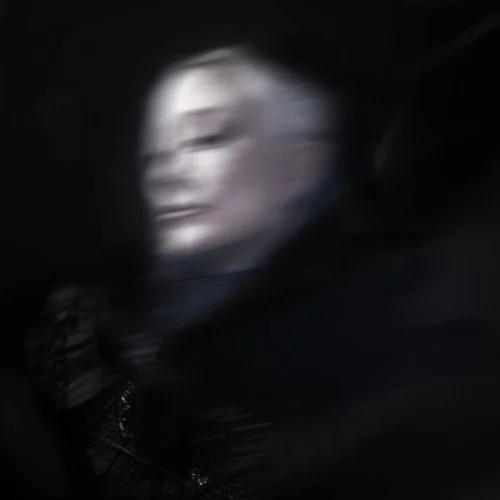
HAYLA: I mean honestly I was just writing. But there is a song, “Easier” where the producer added some strings on the end, and I did this whole like layering thing that, when I was doing that I was sort of aware, that maybe it sounded like it was sort of a hopefulness in a calling kind of thing, outward and upward to wherever, like into a space. I just kind of felt like that was probably the one track that, when I was doing the outro and he had with the string, where I was like, that is such an uplifting hopeful kind of sound, even though it’s sort of a little bit pensive. I wasn’t really thinking about the hopefulness, but listening back to it after the fact, I realize that it does have those glimmers of hope, after the loss and after heartbreak, there is hope to live a good life.
It is an important thing to recognize. It's part of grief to have a little bit of hope in there.
HAYLA: Yeah I think it's one of those things. Apart from it being the saddest thing I’ve ever been through, it's definitely the strangest thing I’ve ever been through. I find it the strangest thing, you know? Like, what do you mean I can speak to that person anymore? I feel like the songs in a way there's a hopefulness. In a spiritual way I feel like I've been surrounded in a warmth ever since I have suffered this loss. I feel like the strings kind of enveloped that feeling, a bit of “I still feel like maybe somewhere you're here, wherever it may be.”
I always call it like little tingles of someone being around you.
HAYLA: That's it! Yeah, it's kind of that and I think the strings in “Easier” definitely capture that hopefulness and that feeling.
A lot of the titles on this record are heavy hitting words as well. I really enjoyed the order in which the tracks are placed. They are so strategic and really walk you through the process and the feelings that you have during grief was an intentional decision or did you kind of release them in the order they were written?
HAYLA: They weren’t written in that order, no, I actually can’t remember the order they were written in. The reason why they're in the order that they are is, I did a show at St Pancras Church in London and we were going through the rehearsal process of how that was gonna be and sound because we have a string quartet and also a grand piano so we were looking at how musically it would flow. We’ve decided that should be the setlist, so the setlist of St Pancras show is the tracklisting of the album because after doing that show, thematically and also just vocally, that it felt somehow like it became a timeline almost.
It wasn’t a thought out thing apart from it literally we decided that was the tracklisting for the St Pancras show. then after doing that show and listening back we were like, I think that is how it needs to be. It was something that was born during a live performance of the entire album for the first time and seeing people‘s reaction and feeling it viscerally myself as well and we were like “that needs to be like that.” I’m so glad that I performed the album live before I put the album out because it really did totally dictate the tracklisting.
It came out so beautifully.
HAYLA: Thank you so much! It was kind of a thought out after the fact but it was the show that formed that tracklisting. We thought a lot about the tracklisting for the show so we were like “Well I think we thought that much about that it should be…” So, thank you very much.
You’re welcome! A little earlier you mentioned this album does shy away from the EDM sound that you usually go for and you're known for your vocals, you have very incredible powerhouse vocals, and DARK is almost transparent in the sense it doesn't really hide anything, like you said it's a bit raw. Did you feel a need to hold back vocally to let that rawness appear a bit more in the album?
HAYLA: No, it was whatever the day presented itself as. There's one song "I don't believe it anymore,” we were in the room and we had like detuned guitars and we were just playing around with actual instrument, and I just sat there on my phone and just wrote the whole song as was like “right, im going in the booth” and that was kind of it.
But I didn’t think about anything. It was honestly the most fun that I’ve had, even though the songs were really quite heavy. It was the most fun I’ve had in a studio writing session, that group of sessions, in like years because I didn’t think “it has to be this thing,” “it has to be that,” “I need to have that climatic vocals.” I think playing around with texture and voice – I didn’t think about it, it was just kind of whatever I don’t know. It was fun to play around with something that maybe people wouldn’t have heard from me as much before.
I like what you said about it being the most fun that you had. Sometimes when we go through grief we experience life in a different lens and somehow the little things we do to get through it, do feel more exciting and feel more fun like you described.
HAYLA: Those sessions were real moments of light in all of the darkness I was feeling. On my vinyl I wrote my thank yous and I just said to everybody thank you so much for being real moments of light in everything, in the darkness I was feeling. They helped lift so much.
Your previous album Dusk was released about two years ago now, which is very long but still a decent amount of time. And you’ve talked about how you’re going through a grieving process of your own. When you look back at the earlier versions of yourself from two years ago, what parts of yourself feel the same and what feels different?
HAYLA: There's real pinpoints in that album, that album was written in the space of over three years. So Dusk was actually like a collection of songs that I’ve written over three years that I loved and felt resonated with me and had done for some time that I put together. So pinpoints in my life where I can definitely pick out tracks from Dusk that still feel like they resonate now, I think “Unfold” is one 100%. I think "Treading Water” is one as well because I think I’ve been through a lot more break ups since then. That's kind of a song about insomnia and not being able to sleep after a break up. And feeling like you're so far away and so far from being able to find sleep and slumber, and also awakeness.
There are real pinpoints. I think “Fall Again,” that's a song that I think if I was going to meet that ex now, I would still probably feel the same way. It's kind of “would I be okay if I saw them, I don’t know really honestly.” I think it’s funny because Dusk is three years of tracks that I loved.
I feel like there's one thing that I suppose in a personal kind of way that I don’t think that I could’ve anticipated when I started writing those songs, what I would have been through personally. At that time I couldn't have, in my worst nightmares, you know? I don't think I would have felt like that would’ve been a possibility, that “DARK” was going to be something that I would have written. Because I wouldn't believe that that was gonna happen, that loss that I had.
I see that you're on tour right now, sometimes when we are able to experience a song in a different setting, for example taking this album on tour they take on a different meaning. Have any of the songs off of “DARK” taken on something different since playing them live?
HAYLA: I think what’s been amazing after all these shows is I’ve actually been meeting people after shows and talking to them, and I think that the one thing that’s really standing out is that the more that I write, the more that I do shows, the more that I’m singing, and sharing music, is how much connection people need. And I think also as well how much music can really help and I think some of the stories — I’ve had people come up to me and say “I’ve been going through it and like this song has really resonated and really helped me.” I think the more that I do shows, and the more that I write the more that I realize how much music can really bring people together and make people feel like they’re less alone and like they’re seen and get some catharsis.
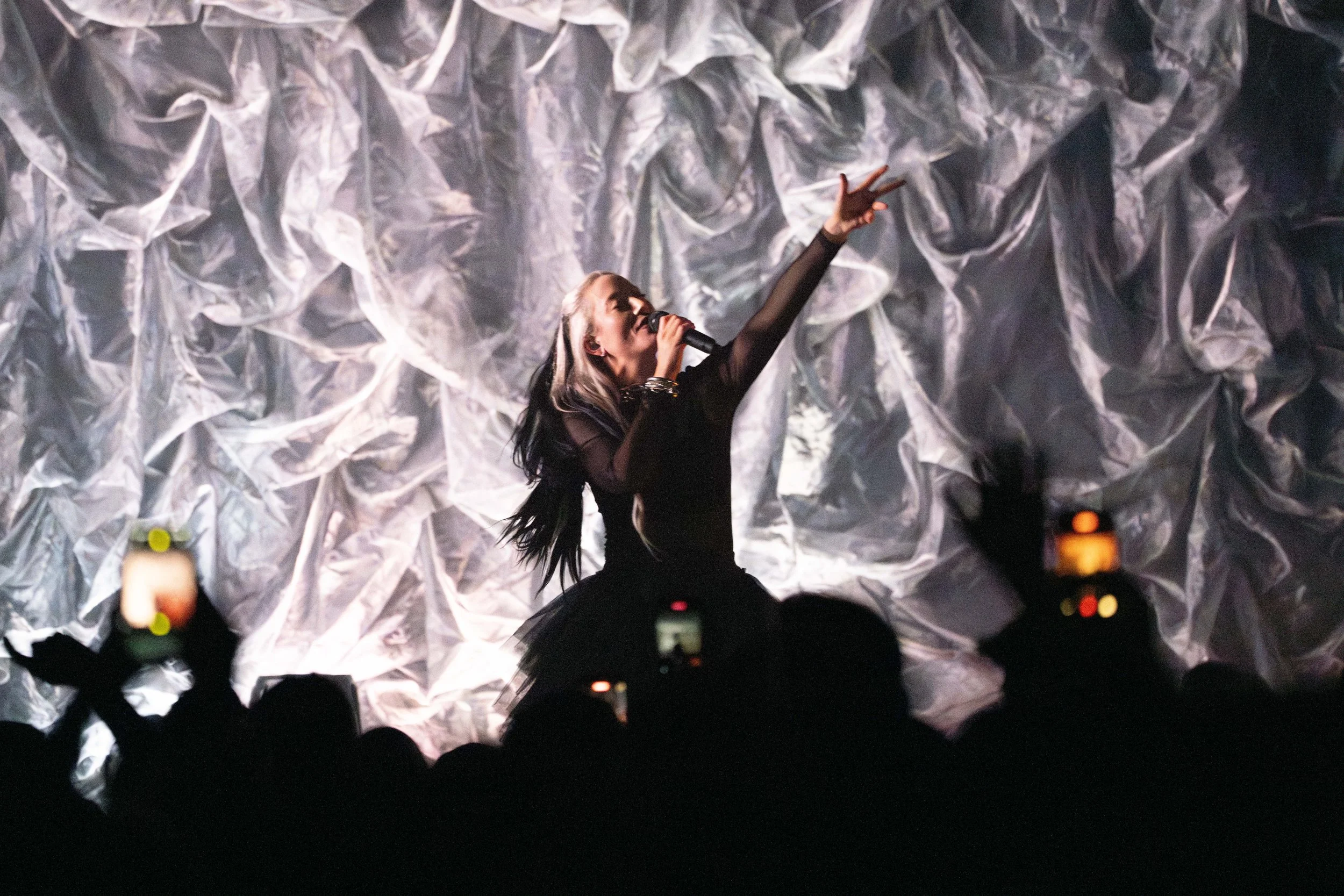
I think so many things can be released on the dance floor like emotionally. I think if anyone is coming to the shows, I think for me live music is one of the things. Apart from traveling, live music is one of those things. I think if you can do one thing for yourself, I think going to a live show to release, is one of those things. That's something that all these songs – like I said, I didn’t anticipate writing these whatsoever, but hearing people's stories and how so many songs resonate with them have truly made me realize how unknowingly, but how important being authentic and sharing stories, even though sometimes it’s the hardest thing, can be. In the different lens of me being the studio and just releasing the music but being on the road and being able to connect with people directly, and I get DM‘s sometimes as well and connect through people that way too, but I think sometimes talking about the hardest things can be the best thing.
I think that if people come to the shows end up feeling like they’ve actually been able to do something really good for themselves and if anyway the music helps then I’m really happy that it has.
Do you think that this experience will change the way you go about writing in the future?
HAYLA: 100% yeah. And I don't think I’m going to say goodbye to EDM whatsoever. I think probably the next album it’ll probably be an infusion, I think “DARK” the album, the influence of it, has really influenced my way of thinking. I realized I was scared of releasing this album actually. I was quite worried about potentially alienating people, because it obviously doesn't sound like what I've done before and actually the response that I had so far and realizing really being authentic and just writing things that unfortunately a lot of us will go through and probably resonate with heavily. It's made me realize the importance of sharing and I think it's always going to be something that, with the next album wherever I go with it, both of the albums and the things that I've done collaboratively are just going to pour into that.
I'm excited for what's next, I didn't realize how much people needed these songs.
I cannot talk about your performances without mentioning your wardrobe because you have a phenomenal wardrobe. How has your approach to fashion evolved with your music and more specifically with “DARK”? Because what we wear can kind of reflect what we're feeling.
HAYLA: My color pallets is always the same, it's my favorite color. But I love texture and shape and different cuts and quite avant-garde cuts. I’ve always loved fashion. I always love fashion, I always have been putting pieces together, I love playing around with it. But that elevation, I always felt like that was for somebody else. For example, the show outfits that I have now – I was always kind of like “How do I get to that next? How do I do that?” and I met an incredible stylist called Beau Tiger Rae who I've been with for four years now. He has given me a window into how to elevate and play around, really a license to play. The stage outfits that I have now we worked really closely together, the one that I’ve got now we actually got made and it’s in this three piece thing so I can mix a match which is so important on the road, otherwise I have so many outfits.
But the more that I’ve grown as an artist the more I’m playing with larger pieces and I think that this period of this album – I’ve always loved historical fashion and I love period dramas throughout life, and I think that the styles and the combinations are different cuts are throughout history. We’ve really mixed and matched. There's no historical figure that I’m referencing in any way. We’ve got some mixtures on the album cover, kind of influencing Victorian pieces that are actually Victorian, some pieces that are newly made, but actually kind of more reminiscent of the Marie Antoinette era of clothing, the larger sort of skirts (but not referencing Marie Antoinette).
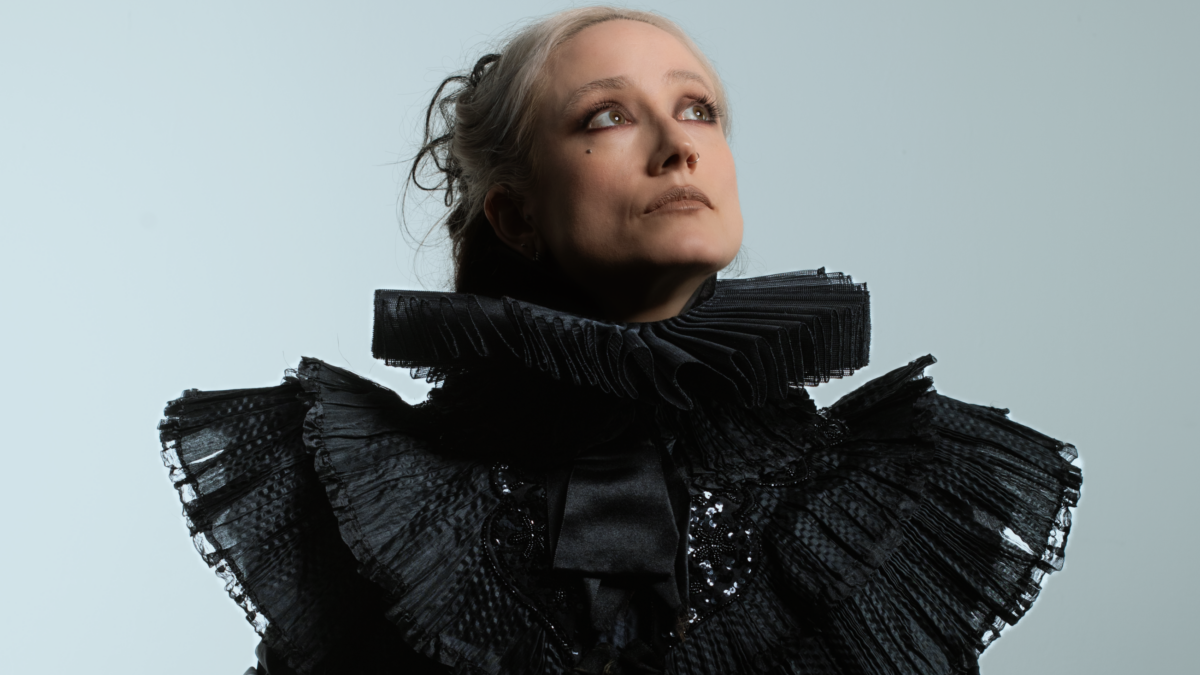
With this album I’ve been able to further hopefully bring people into my world. I think that fashion has a great way of storytelling and I've had the most fun just trying to elevate each time and play around with texture, style, historical pieces, going into archives and finding things that just really work together even though it’s from different time periods, it’s been really really fun.
I’m kind of like, what’s next? When I get back I’m gonna swap out my outfit that I got made, I’m gonna get it elevated more so I can add to that and I’m gonna get some more pieces as well. I hire a lot of things from different designers. My wardrobe is quite extensive at home but not as extensive as you think because it’s a higher kind of basis, I need my own archive basically. One day I will, one day I’ll have a wardrobe big enough.
And lastly, you touched this a bit, but what do you hope the next version of HAYLA sounds like?
HAYLA: I’ve already got the album cover, the concept, the look, and the stage design down in my head for my next, I haven't even written it yet, the album, but I know all of that. I think it’s going to be an infusion – the metaphor may be coming out of the darkness. There probably will be some more EDM but I think it’s going to be something a bit renewed somehow. I think we carry scars with us for the rest of our lives. I think it’s going to be something that will probably reflect that but also bring in potential glimmer of hope, but still understanding what's happened. I know the album title and I’m not gonna share it yet, but people may have an idea of what it may be called. I just think that like, how do we move through the world after being through so much pain, and trying to figure out how to have hope, and also make people feel like there is a good life to be had.
I’m gonna try to pull on those themes I think and who we do it for even if they’re not here.
