
“SERENA JOY”: A WARNING SIGN TURNED INTO A POP ANTHEM
BY ATHIRA MENON
Olivia Rodrigo's “serena joy” began with 500 copies in an independent record store and has now arrived with a much bigger message. On August 24th, three days after Analog Music Shop, an independent record store in Tustin, California, sold out limited-edition CDs in hours, the track hit streaming services worldwide. The intentional release came just ahead of Rodrigo's Daisy Chain Fields festival, where proceeds will benefit organizations including Planned Parenthood and the Center for Reproductive Rights. What began as a small physical release now reaches a much larger audience, carrying a message that feels increasingly difficult to ignore.
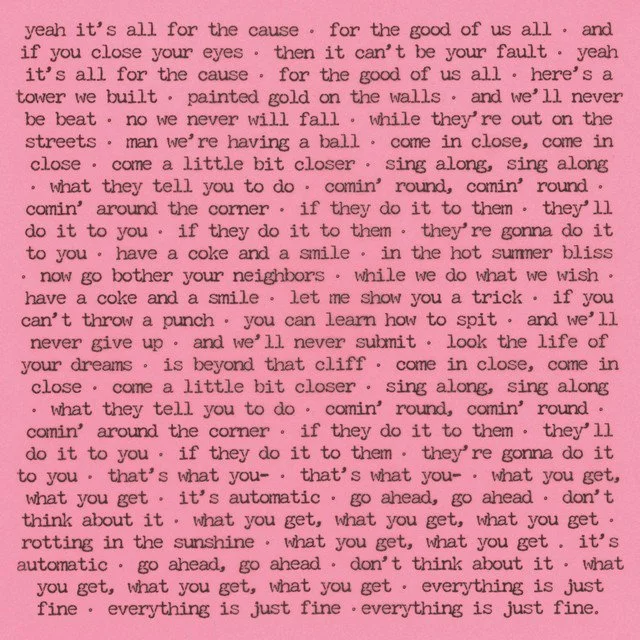
“serena joy” was originally recorded during the sessions for Rodrigo's third album, you seem pretty sad for a girl so in love, but ultimately didn't make the tracklist. Rodrigo has described the song as one that simply didn't belong within the album's beginning-middle-end narrative. While the album was constructed as a chronological story about a relationship, “serena joy” looks outward, facing themes of societal ignorance, complicity, and the consequences of choosing not to pay attention.
Yet sonically, “serena joy” could have been on Rodrigo's previous albums and no one would've batted an eye. Built around a driving bassline, bright synths, and a restless energy, the track fits the angsty, rebellious vibe albums like GUTS and SOUR were known for, but with a much more mature theme.
The ironic contrast between the song's sonic scope and the lyrics is what makes it so interesting. The caTChier it gets, the more uncomfortable its lyrics begin to feel. That discomfort starts with the title itself. “serena joy” takes its name from Serena Joy, the wife of a Commander in Margaret Atwood's The Handmaid's Tale. In the novel, Joy advocates a return to traditional, religious values and restrictive ideas about women's roles. Long story short, she discovers the system she helped build works against her as she constructs a society that strips women of autonomy, education, and independence. Convinced that her position would place her above its restrictions, she instead becomes another victim of the very system she helped uphold.
Rodrigo captures that contradiction in one of the song's most striking lines: “If they do it to them / They're gonna do it to you.” It’s a simple statement, but within the context of Serena Joy, it carries a much heavier warning about the false security of proximity to power. And that’s where the song starts to seem less like a reference to a fictional dystopia and more like a wake-up call. Systems built on oppression don’t make exceptions simply because someone believes they are on the right side of power.
The production only makes the message hit harder. Instead of slowing down for its darkest moments, the song keeps its momentum. The bassline pushes forward during the chorus:
“Sing along, sing along / What they tell you to do.” The chorus’s vocals feel intentionally hypnotic and commanding in their repetition. This is where the track's title and its sound collide. The song itself becomes a warning against blindly following along, the kind of thinking Serena Joy herself fell victim to.
The theme of treating warning signs as background noise fits the song's bright synths and infectious rhythms, because underneath them lies the message she's been repeating all along: closing your eyes doesn't make you innocent.
