BY CHELSEA VAUGHAN
The 2027 Grammy nominations were revealed on Monday, November 16, and to say the competition is tough would be an understatement. Artists including Olivia Rodrigo, Olivia Dean, and Rosalía received nominations in major categories, while several electronic and dance artists also earned recognition.
This year's dance/electronic categories feature artists such as Underscores, Tinashe, Slayyyter, Tame Impala, Madonna, Robyn, Skrillex, and Fred again.., among others. Slayyyter also received a nomination for Best New Artist, marking a major moment in her career.
However, not everyone was pleased with the nominations, including DJ and producer John Summit.
Summit has had a successful year, releasing his latest album, CTRL ESCAPE, and embarking on an arena tour. Despite these accomplishments, he did not receive a Grammy nomination, prompting him to share his frustration on X (formerly Twitter).
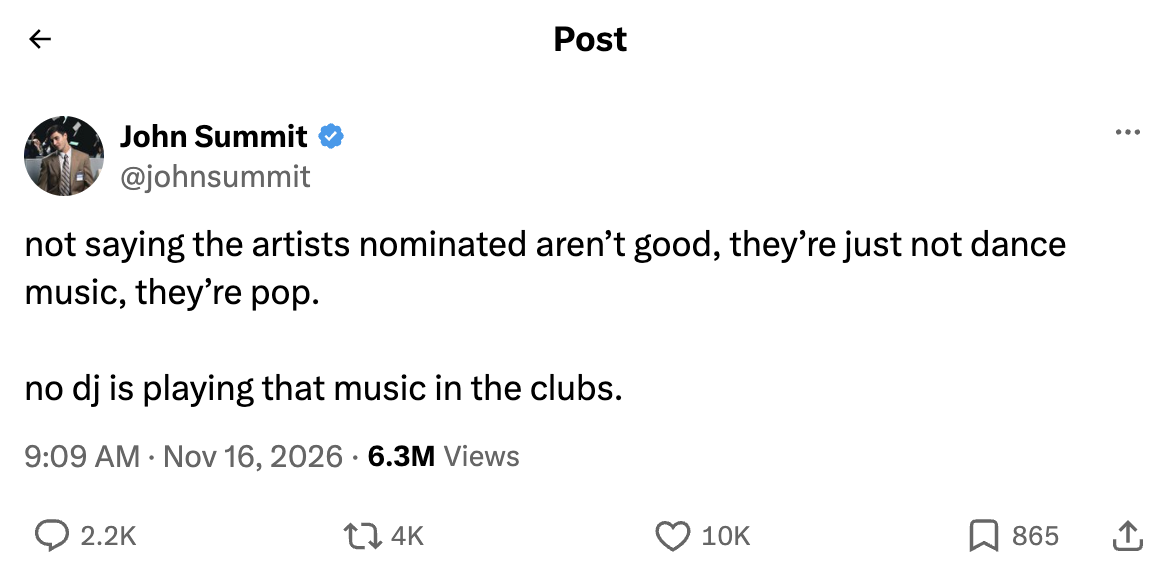
In his initial posts, Summit criticized the Recording Academy for what he described as a lack of respect for electronic dance music and DJs. He argued that the categories were largely filled with pop artists rather than traditional dance music producers, even claiming that DJs weren't playing the nominated music in clubs.
While Summit's frustration with the Recording Academy is understandable, his comments sparked a larger discussion about what qualifies as electronic music and who deserves recognition within the genre.
There is certainly room for a conversation about whether the Grammys adequately recognize DJs and producers whose work is centered around club culture. However, suggesting that the nominated artists are somehow less representative of dance music overlooks just how diverse the genre has become.
It's also important to remember where dance music came from in the first place.
During the 1970s, disco became an important part of nightlife, particularly within Black and LGBTQ+ communities. In Chicago, venues such as The Warehouse helped shape the development of house music, with pioneering DJ Frankie Knuckles playing a significant role in establishing the sound.
These communities helped create the foundation for much of the electronic music we hear today. Over time, the genre has expanded into countless different styles, with artists such as SOPHIE, Honey Dijon, and Charli XCX continuing to push its boundaries.
With such a broad history and range of influences, it's difficult to argue that only one particular style of electronic music represents the genre.
Many of this year's nominees have also spent years establishing themselves within the industry. Underscores began releasing music at a young age, Tinashe has been pursuing her solo career since 2012, and Slayyyter has spent years building her audience and developing her sound.
Their nominations represent major career milestones, regardless of whether their music falls into Summit's preferred style of electronic music.
Another point of criticism came from Summit's claim that DJs weren't playing the nominees' music in clubs. As someone who frequently attends queer clubs, I can say that I've personally heard artists like Tinashe, Madonna, and Slayyyter played regularly.
Of course, different clubs cater to different audiences, and Summit's experience may be entirely different from mine. However, that's exactly why such a broad statement about what DJs are or aren't playing feels unfair.
Some fans even pointed out that Summit himself had previously included Slayyyter's Grammy-nominated song "DANCE..." in one of his DJ sets. Footage of the performance circulated following his comments.
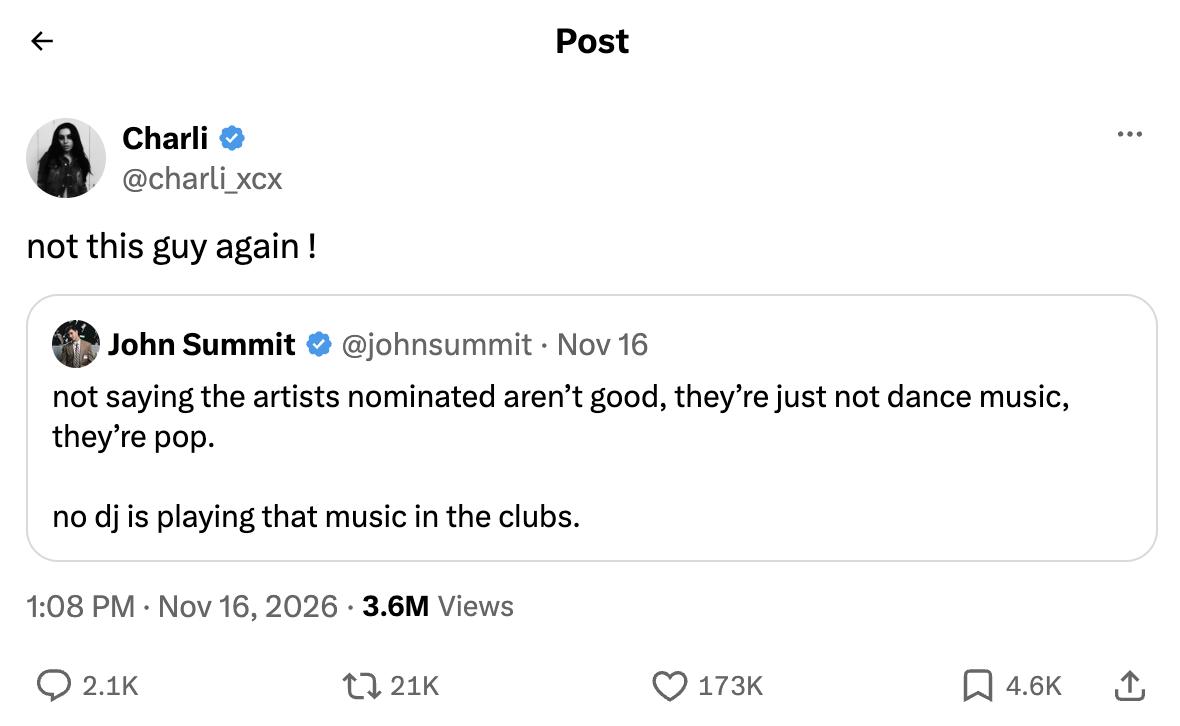
His posts quickly gained attention across social media, including from Charli XCX, who responded with a short but pointed comment: "not this guy again !"
The discussion also reached nightfeelings, one of the producers behind Tinashe's Grammy-nominated track "Melatonin," who responded by highlighting his own background in dance music, including performing at Berghain and working with established electronic artists.
These responses demonstrate why Summit's statements struck a nerve with fans and musicians alike. The nominees aren't necessarily outsiders to electronic music simply because their work incorporates elements of pop.
Following the backlash, Summit returned to X to clarify his comments. He explained that his intention wasn't to criticize the nominated artists, congratulated them on their recognition, and suggested that the Recording Academy should introduce an additional category specifically for dance music DJs and producers.
That clarification is worth acknowledging, and his suggestion does raise an interesting question about how the Grammys categorize electronic music.
As the genre continues to grow, perhaps there is room for more recognition of the different communities and styles that exist within it. After all, dance music encompasses everything from underground house and techno to electronic pop, and each has contributed to the genre's success.
However, recognizing one area of electronic music shouldn't have to come at the expense of another.
Summit has undoubtedly established himself as a successful artist within his corner of the industry, and his contributions to contemporary dance music deserve to be recognized. But that doesn't make the achievements of other artists any less significant.
Ultimately, the Recording Academy is not above criticism, and conversations about representation within the dance/electronic categories are worth having. The issue isn't necessarily Summit's frustration, but rather how his initial comments came across to the artists and fans celebrating this year's nominations.
There is room for more recognition in electronic music without questioning whether the artists who have already earned it belong there.